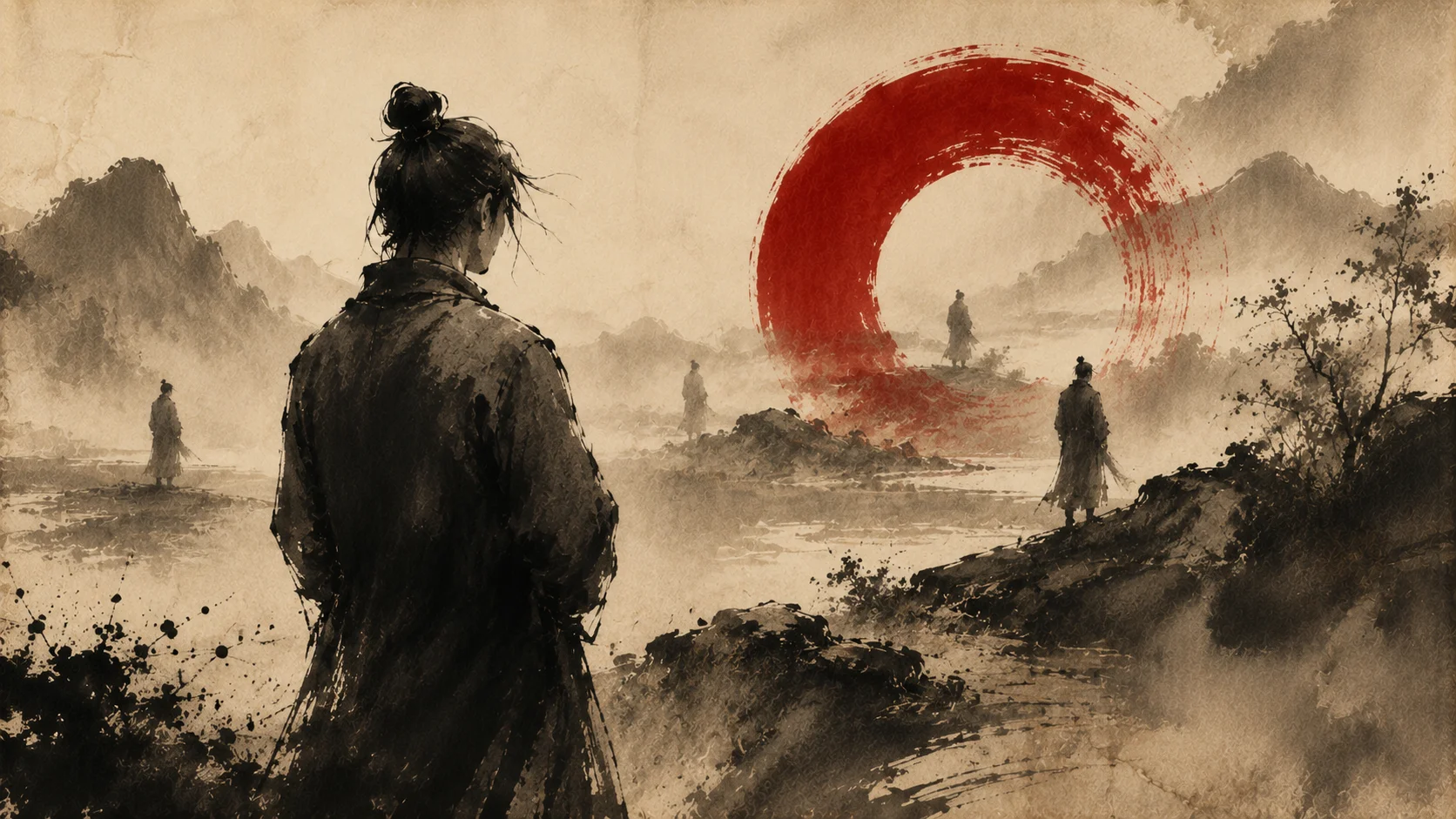
Your jaw is tight again, and you only notice when you realise your tea has gone cold in your hand. You have no idea how long you've been sitting there like that.
Some mornings it's your shoulders instead, riding up near your ears before you've even opened your email. Other times it's just the low, steady ache across your back, the one that's been around so long you've started to think of it as background noise rather than something you notice.
This kind of tension deserves a real answer, and the honest one is that it can have several explanations at once, some of them physical and worth checking with a doctor, especially if it's new, sharp, or getting worse.
Nothing here replaces that.
But if you've already had it looked at, or it's the familiar, low hum that comes and goes without a clear medical story attached, there's another layer worth paying attention to: not what the tension means, but when it shows up.
Notice when it happens
Notice the days it's worse.
Not in general, but specifically.
Maybe it's Sunday nights before a week you're dreading. Or the hour before a call you've been avoiding.
Sometimes it's simply the stretch right after you agree to something you didn't want to do, and you only feel the tightness once it's already too late to take it back.
None of this proves the tension is caused by any of it.
Stress and physical symptoms can show up side by side without one explaining the other cleanly.
But context is still information, even when it isn't a cause.
Your body doesn't need to explain itself in one sentence. It just needs you to notice what it does, and when.
Most advice here jumps straight to fixes: stretch more, breathe deeper, sleep better.
All reasonable, none of it useless.
But it tends to skip a step that actually helps first, which is simply tracking what surrounds the tension before rushing to explain it.
What was happening the hour before.
Who you were talking to, or avoiding.
Whether the tightness eases once the thing you were dreading is over, or whether it stays regardless.
A broader way of looking
This is closer to what Intoma Root looks at.
Not a diagnosis, and not a claim that it knows why your body feels the way it does.
It looks at the symptom you're carrying alongside the stress, the context, and the patterns you recognise, and hands back a broader way of looking at what you're feeling, not an explanation that closes the question.
You might still be holding your tea a little too tightly tomorrow.
But you may also notice, for the first time, exactly when your hand started doing that.
Intoma is not a medical device and does not provide diagnoses or medical advice. Always consult a qualified health professional regarding physical symptoms.